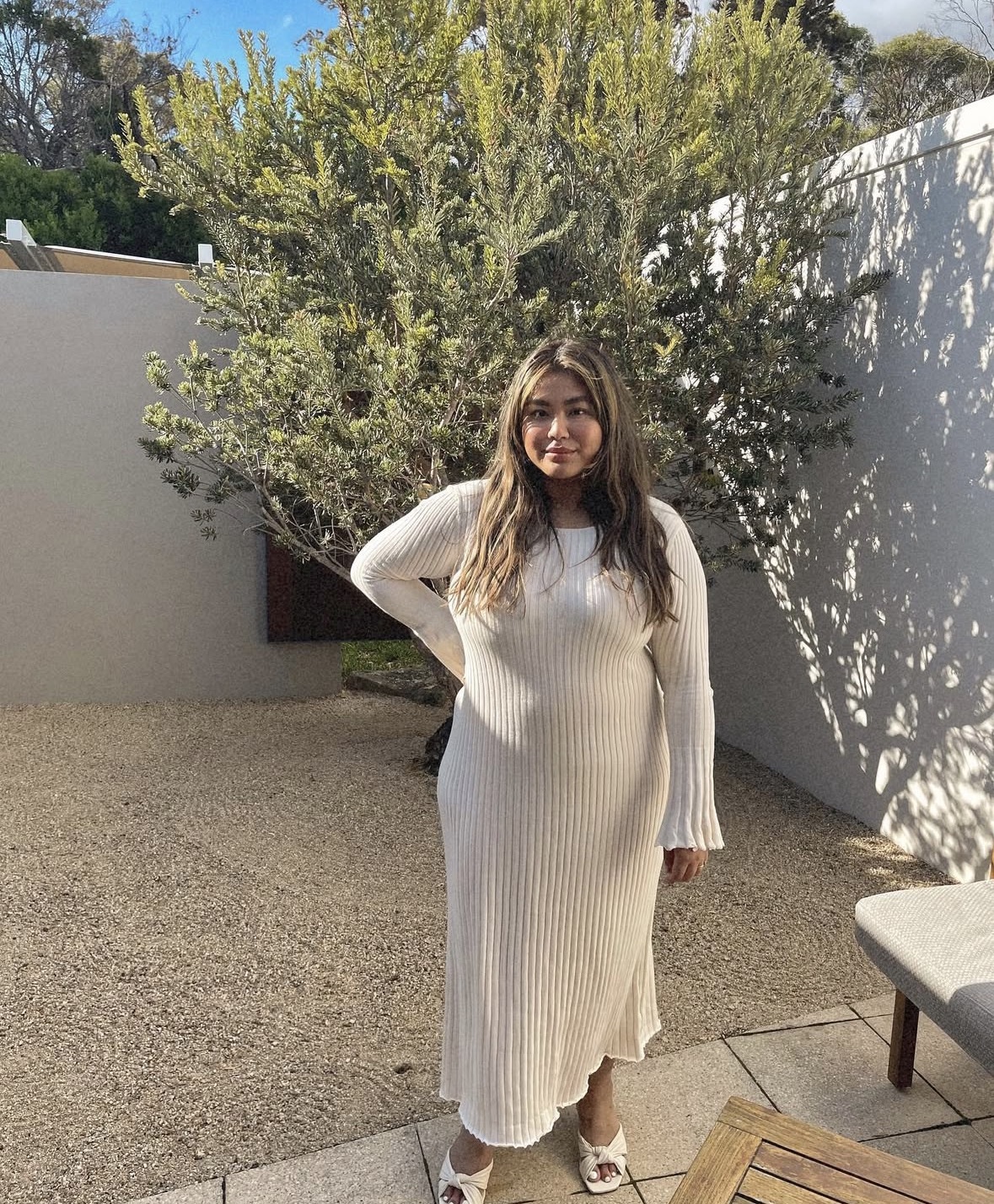
I want to be upfront before I get into this. I'm not someone who finds it easy to talk about numbers on a scale — and if you've struggled with your weight, you'll probably understand why. But I'm sharing this because when I was looking for answers, I couldn't find an honest story from someone my age who'd been through what I had. So here's mine.
My name's Jewel. I'm almost 30, I live in Melbourne with my Border Collie Patch, and over the past two years I've lost 40 kilograms. Twenty with Juniper, and another twenty on my own — using everything Juniper taught me. I'm not done. I've got more to go. But I'm a different person already, and I think it's worth talking about.
Before: everything I'd already tried
I've been the 'bigger friend' for most of my adult life. And I'd tried to change that more times than I can count. Fitness boot camps. Restrictive diets. Eight-week challenges. I'd join something with real conviction, white-knuckle my way through it, and then — inevitably — feel bad about myself when I ended up hungry and back where I started.
"I remember being at a HIIT class when I was at my heaviest. There was this move where we had to do some rolling exercise on the floor, and I felt so embarrassed. Like everyone was looking at me, and I just couldn't do it the way everyone else could. It was one of those moments where you realise something has to change — but you still don't know what."
The pattern was always the same: restrictive eating followed by intense exercise. Lose a bit. Gain it back. Feel worse. Repeat. I understood, in theory, that sustainable change required a different approach. But I didn't know what that looked like — and I couldn't find anything that actually worked for me.
By the time I was 25, I was between 110 and 112kg. I was thinking about what that meant for my long-term health — visceral fat, diabetes risk, all of it. My family has a genetic predisposition to type 2 diabetes. I knew my weight wasn't just an appearance issue. It was a health issue. And every approach I'd tried was failing me.
"If losing weight was as simple as eating less and moving more, no one would be overweight. I'd done both. I was still hungry. I was still gaining weight."
— JewelWhat made me finally try something different
It was a friend. She told me about Juniper — a weight loss program that took a different approach, one that worked with your biology rather than just telling you to try harder. I was sceptical at first. What I understood was that it worked on appetite and the patterns that drive overeating, and that felt meaningful to me, because food had been a huge part of my mental landscape for years. It was always there — always on my mind.
There was also something personal happening at the time. I'd come out of a relationship. I'd been holding onto my old identity, my old life, for longer than was good for me. I was ready — genuinely ready — to change things. Not for anyone else. For me. When I read through everything and understood what the program actually involved, I felt supported. I felt like I was in good hands. That was enough to take the first step.
The journey: what two years actually looks like
I want to be realistic here, because I think a lot of these stories skip the complexity. This wasn't a straight line down. But it was — compared to everything I'd tried before — remarkably consistent. And for the first time, it felt sustainable in a way nothing else had.
Year one, on the program: 20kg lost. My portions got smaller naturally — not because I was white-knuckling a calorie count, but because I just wasn't as hungry as I used to be. For the first time, food wasn't consuming my every thought. I had room in my head for other things. I started learning about food differently: not just what to eat, but why, and what was actually going to nourish me.
Then I took a break. I paused the program for a while. This was scary — I'd worked so hard and I didn't want to lose ground. But here's the thing: I didn't. The habits had stuck. The way I thought about food had changed. I maintained my weight loss through that entire period, which I honestly wouldn't have believed possible a year earlier. The program had given me more than results — it had given me a new relationship with eating.
Year two, on my own: another 20kg. Using what the program had taught me — about portion sizes, about eating when I was hungry (not bored), about moving my body because it felt good rather than because I thought I should — I lost another 20kg. I'm currently 80kg and my goal is 70kg. I'll get there.
On the question everyone asks: is this cheating?
I get this question — sometimes directly, sometimes in the form of a cold DM on Instagram. And I'm going to be straightforward about it: no. It's choosing a different, evidence-based tool when the conventional ones have failed you. I tried everything else first. I did the boot camps. I did the restricted eating. I did the intense exercise. None of it worked for me long-term.
Juniper set me up for a positive trajectory. It helped me understand food — portions, nutrition, how to eat intuitively. It gave me the kickstart I needed. And when I responded to those Instagram DMs asking about my journey? I pointed them toward the same assessment I took. Every time.
"I got my friend onto it. He was also heavy, and I believe he's lost about 20kg now. This doesn't just improve your life — it can improve the lives of the people around you."
I didn't go in overthinking it. I trusted the process, read through the information, and felt reassured. I was lucky that I didn't experience any issues along the way — and I'd say the same to anyone who's been put off by things they've read online. Do your own research, then take the assessment and make your own call.
Beyond the scales: what nobody prepared me for
Losing 40 kilograms changes more than the number. It changes your relationship with food, with your body, with the way you move through the world. Some of that I expected. Most of it I didn't.
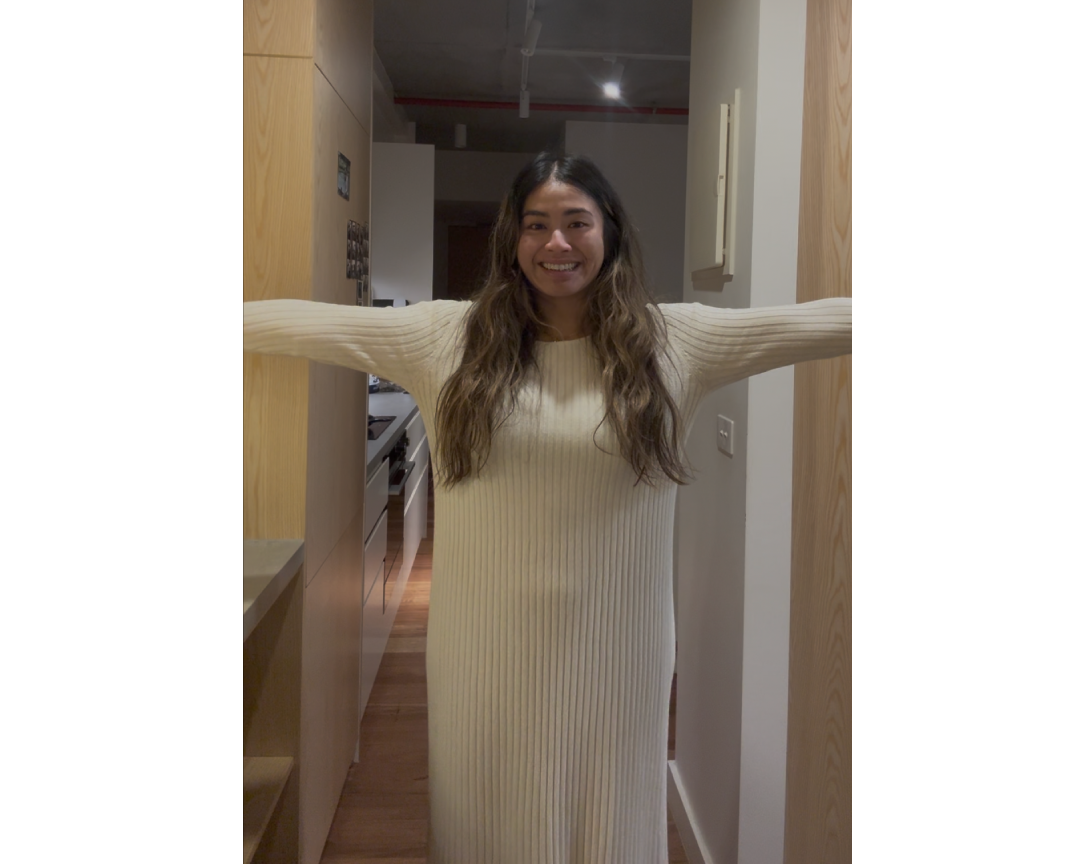
The same dress, two years on. I had no idea when I wore it that I'd put it on again just to show how much room there was.
My relationship with food
Before, food was a constant in my mental landscape. I wouldn't say I ate out of boredom exactly — but it was always there. Always the next thing I was thinking about. The program changed that in a way that felt almost surreal: I had room in my head for other things. There were times I had to remind myself to eat.
But the more lasting change was what I learned. The shift from eating for taste or habit to asking: how is this going to nourish me? I eat when I'm hungry now. I don't eat because I'm bored. I went out for pizza with a friend recently and had half a pizza. I sat back and genuinely thought: wow. Before, I would have had the whole thing and then some. I wouldn't be where I am today if the program hadn't reshaped how I think about food — because I was such a big foodie.
"Food was an addiction. Not the taste — it was more about how it was going to nourish me. Now I eat when I'm hungry. I don't eat because I'm bored. That's the shift Juniper gave me."
— JewelWhat balance actually looks like now
I didn't know what balance felt like before. Before, it was hot chips, pasta, KFC — constantly indulging. Now I think about greens and protein. I can go out with my friends, enjoy myself, and still make better choices. Not restrictive choices. Better ones. There's a difference, and it took me a while to understand it.
The health coaches helped with this. When I was on the program and confused about food — what to eat, how much, what to do when I was feeling stuck — they gave me practical advice that was actually useful. Not just information I could have found online, but the kind of support that made the information stick. Honestly, the mental readiness and the support was the most important thing. The information exists everywhere. Having someone help you use it doesn't.
The stuff that surprised me most
I love fashion. It's always been important to me — but for years, my relationship with clothes was about finding things that fit rather than things I loved. I was a size 16 when I started. I'm a size 12 now. And the moment that hit me most wasn't buying something new — it was going into a store and realising that things were actually way too big for me. You stop knowing what size you are. Those are the holy cow moments.
I had to get a completely new wardrobe. I donated bags and bags of clothes. There was one piece — something I'd wanted to fit into for so long — that I finally got into and then had to get rid of because it was too big. I don't know how to explain how that feels.
From cameras: I used to avoid them. Now I'm the annoying one at every dinner always asking for a photo. From Pilates: I do it now and actually enjoy it, which is not something I ever expected to say. From blood tests: everything in check. The visceral fat risk, the diabetes risk I carried in my family history — these feel like things I'm actually doing something about now.
The confidence shift
Before, I felt like I was in total neglect. I knew I was heavy. I felt like I was hiding — from cameras, from certain clothes, from certain social situations. Now I have a whole self-care routine. I'm so much more in tune with myself. I don't want to hide anymore. I want to show up.
People started commenting on my face — how much slimmer it looked. Around the 80kg mark was a turning point: the difference started showing in photos in a way that was undeniable. People were saying: you seem like a whole new person. And I'd just say: I know.
Where I am now — and where I'm going
I'm currently 80kg and my goal is 70kg. I'm planning to get back into the program for the next stage because I know it works, and I'm not done yet. But even in the gap between — maintaining, living differently, eating intuitively — the foundation has held.
I'm my own biggest inspiration now. That might sound over the top, but I mean it. I don't do restrictive dieting anymore. I eat intuitively. I move because it makes me feel strong. I got one body, and Juniper gave me the power to take care of it properly — for the first time in my adult life.
What I'd tell myself before starting
Your life is going to change. You are going to become the person you are about to become. You are going to lose the weight. You are not going to be identified as the heavy one in the group anymore. You are going to surpass your own goal. You can do it.
And what I'd say to anyone sitting on the fence right now: it doesn't matter where you think you are. You just have to think about your goal. Take the leap and do it. Try it for a year. It will change your life — not just externally, but internally. The number on the scale is just where it starts.
"People ask about the cost. But this is the best investment in yourself you will ever make. If you commit for a year, you can do it. If you want it badly enough, you'll make it work."
— Jewel